

Why stability matters for online workflows
When you run marketing research, ad verification, or compliance checks, your results depend on consistent session behavior. That consistency is especially valuable static residential proxies when you need repeatable outcomes across multiple runs of the same task. Instead of fighting access errors caused by frequent IP changes, you can focus on getting accurate data and maintaining reliable integrations.
Many teams also care about reducing friction in authentication and session-based systems. If a platform flags sudden location or network shifts, rotating IPs can trigger extra verification steps. Using stable residential routing supports smoother sign-ins, steadier browsing patterns, and less variability in how sites respond. The end result is a workflow that behaves more like a predictable user session rather than an automated network.
Benefits for privacy, data collection, and business operations
This can improve the quality of web scraping and monitoring by presenting traffic that better matches real consumer browsing. When your rotating proxies collection process expects stable endpoints, a consistent IP reduces the chances of incomplete captures or sudden blocks. It also helps teams correlate data points more reliably when building reports, dashboards, and audits.
Privacy and security are another advantage. Residential IP traffic can help mask origin details while still supporting legitimate business use cases like competitive research and content monitoring. For businesses, that means you can gather insights without exposing internal infrastructure or scaling patterns. Additionally, stable proxy assignments can simplify access management across teams, since you can document which network identity is used for which job.
These benefits extend to operational efficiency as well. With fewer access interruptions, your engineering time goes toward improving extraction logic rather than chasing preventable errors. You can also standardize retry rules, caching behavior, and session handling because your network identity is more consistent. Over time, a stable approach can lower the cost of retries and reduce the overhead of constant proxy reconfiguration.
To understand the difference in practice, consider how rotating setups behave under load. Stable residential access supports longer-running sessions and more consistent page rendering. That makes it easier to validate results, especially when you need the same source conditions across multiple steps of a workflow.
How to choose the right proxy setup for your use case
Not every project needs the same proxy behavior, so start by mapping your goals to session requirements. If your work depends on maintaining consistent access to the same accounts, catalogs, or endpoints, stability becomes a primary selection criterion. Look for solutions that are designed specifically for consistent residential IP assignment. This helps you avoid the operational chaos that comes from unpredictable network identity changes.
Next, evaluate the type of scraping or verification you perform. If you monitor listings, track pricing, or validate search visibility, stable sessions can reduce drift between requests. If you need to spread traffic broadly, rotating methods may still be useful for distributing load across many identities. The key is to align the proxy strategy with how the target platform interprets network behavior and how your pipeline measures success.
It also helps to consider performance characteristics like connection reliability and throughput. Stable residential traffic should maintain smooth connectivity so your requests do not stall mid-session. Review how your proxy provider supports configuration, authentication, and session management. A clear setup process can prevent subtle issues that degrade data quality, like inconsistent headers or session cookies not persisting as expected.
Finally, assess risk management and compliance requirements. Use cases like account verification, brand monitoring, and data collection should be implemented with respect to applicable policies. Choose proxy infrastructure that supports auditability and predictable routing so your team can document how data was accessed. When your network strategy is stable, it becomes easier to apply consistent governance controls across workflows.
Conclusion
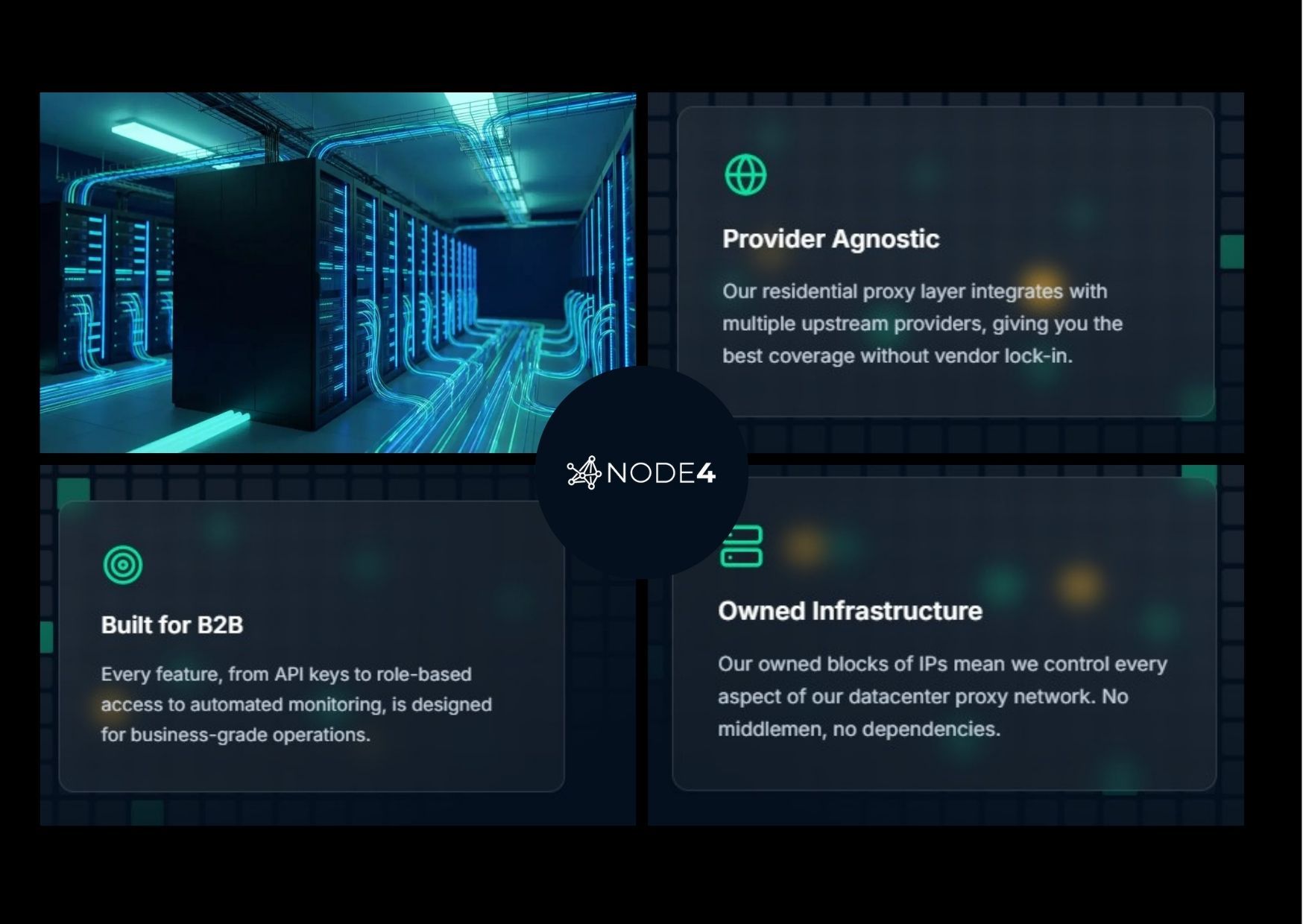
They help reduce avoidable friction during authentication, improve repeatability in data collection, and support smoother automation for business-critical monitoring. While rotating approaches can be useful for distribution, stable residential routing is often better aligned with workflows that depend on continuity. For teams seeking dependable residential IP behavior, node4.io offers residential proxy solutions designed to support privacy, data collection, and real operational needs. When you implement a stable proxy strategy, you gain more than a technical improvement—you gain predictability in how your system behaves. That predictability makes it easier to tune your pipeline, validate results, and maintain consistent session logic across steps. If your priority is consistent online behavior rather than frequent identity shifts, a stable residential approach can streamline both development and ongoing operations. With the right configuration, node4.io can help you run your workflows with confidence and clarity.
