

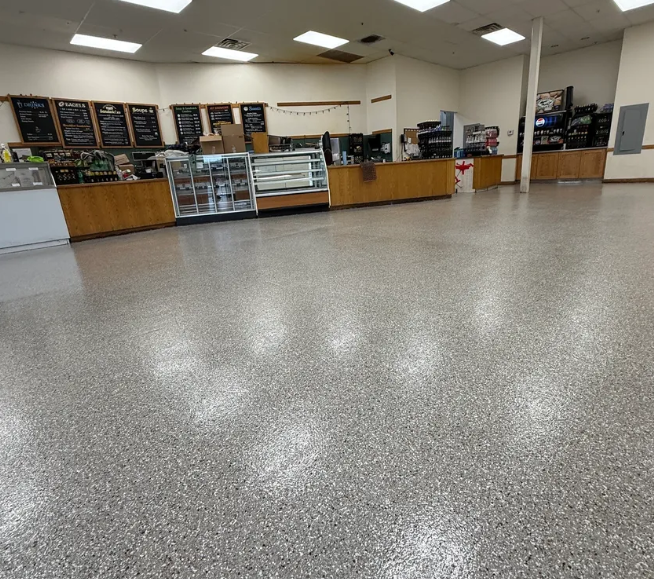
A commercial kitchen needs flooring that can handle demanding daily conditions without becoming difficult to maintain. Constant foot traffic, moisture, food spills, cleaning routines, and heavy equipment can all affect the surface over time. Choosing a suitable floor therefore requires more thought than selecting a color or decorative finish. The material, installation method, surface preparation, drainage, and maintenance routine should all be considered before work begins. A well-planned flooring system can support a cleaner, more practical working environment.
Start With Commercial Kitchen Flooring
Commercial kitchen flooring should be selected according to the specific conditions of the facility. A small café kitchen may have different requirements from a large restaurant, catering facility, hotel kitchen, or food production area.
Consider how many people will walk across the floor during a typical shift and how frequently the surface will encounter water, food ingredients, grease, or cleaning chemicals. Areas around sinks, cooking equipment, refrigeration units, and preparation stations may experience particularly demanding conditions.
The floor should also fit the daily workflow. Employees need a surface that is practical to clean and suitable for regular movement throughout the kitchen.
Think About Moisture and Cleaning
Water is a normal part of commercial kitchen operations. Floors may be cleaned several times throughout the day, while accidental spills can happen during busy service periods.
A flooring system should therefore be selected with the facility’s moisture conditions in mind. Drainage should also be reviewed because even a durable surface can become difficult to manage when water does not move away effectively.
Cleaning products matter as well. Ask the installer which products are suitable for the finished floor and whether any chemicals should be avoided. Following appropriate maintenance recommendations can help preserve the surface over time.
Compare Epoxy Flooring Options
Epoxy flooring is commonly considered for demanding commercial environments because it can create a seamless finished surface when properly installed. It is available in different formulations, thicknesses, colors, and textures, allowing the system to be adapted to various applications.
However, not every epoxy product is designed for every kitchen environment. The selected system needs to match factors such as moisture exposure, cleaning procedures, traffic, temperature, and expected service conditions.
A professional assessment can help determine whether epoxy is suitable and which formulation is appropriate for the facility.
Consider Slip Resistance
A commercial kitchen can become wet during normal operations, so traction deserves careful attention. A highly smooth surface may be easier to clean in some circumstances, but it may not provide the walking characteristics needed for a busy working environment.
The right finish should balance cleanability with appropriate traction. Ask the flooring professional how texture or aggregate can be incorporated into the system without creating unnecessary cleaning difficulties.
Employee movement should also be considered. Areas around sinks and food preparation stations may require particular attention because moisture and spills are more likely to occur there.
Evaluate Surface Preparation
The condition of the existing floor can influence the success of a new flooring installation. Concrete may contain cracks, grease contamination, old coatings, moisture, or uneven areas that need attention before the new system is applied.
Preparation can involve mechanical grinding, cleaning, repairs, or other procedures depending on the existing surface. Skipping necessary preparation can affect how the new coating bonds and performs.
Ask the contractor to inspect the floor before providing a final recommendation. A detailed assessment gives you a better understanding of what the installation involves.
Think About Temperature Changes
Some commercial kitchens have areas exposed to heat from ovens, cooking equipment, steam, or hot liquids. These conditions should be discussed before selecting a flooring system.
Different materials can respond differently to temperature changes and thermal stress. The floor near cooking equipment may have different requirements from a dining area or storage room.
A contractor with commercial kitchen experience can help identify areas that need special consideration and recommend a system suited to the working environment.
Plan for Long-Term Maintenance
Even a durable floor requires routine care. Develop a cleaning schedule that fits the kitchen’s daily operations and follow the manufacturer’s recommendations for cleaning products and methods.
Inspect high-traffic areas periodically for signs of wear or damage. Addressing small maintenance concerns early can make future care more manageable.
It is also helpful to keep records of the flooring system and products used during installation. This information can be useful when maintenance or repairs are needed later.
Conclusion
The best kitchen floor is not necessarily the one with the most features. It should be the system that fits the facility’s traffic, moisture exposure, cleaning practices, temperature conditions, and maintenance capabilities. Take time to compare materials and ask practical questions before installation. A professional consultation can also help identify requirements that may not be obvious during an initial inspection. If you are reviewing commercial coating options and want to learn more about suitable flooring solutions, avid-epoxy.com can be explored as a starting point for understanding available services and planning your flooring project.
