

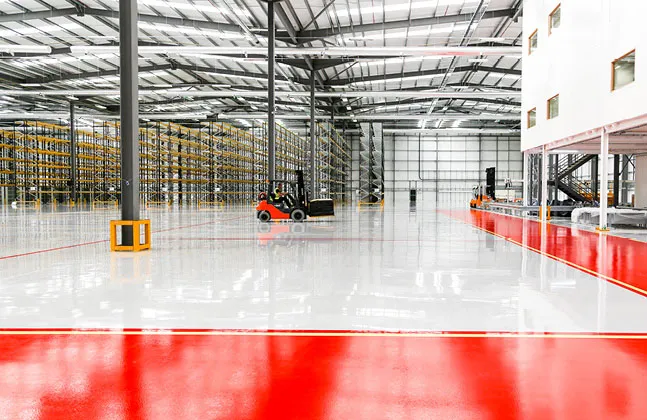
Warehouse managers make hundreds of operational decisions, but the condition of the floor rarely receives attention until something goes wrong. Forklift traffic, pallet movement, chemical spills, and constant loading gradually wear down exposed concrete. Small defects can eventually interfere with equipment movement and routine maintenance. Choosing suitable warehouse floor coatings is therefore about more than improving appearance. The right flooring system should reflect how a facility operates, what materials it handles, and how much disruption the business can reasonably accommodate during installation or future repairs.
Understand How Your Warehouse Operates
Every warehouse places different demands on its flooring. A distribution center handling lightweight packages may experience continuous wheeled traffic, while a manufacturing facility deals with heavy equipment, chemicals, or concentrated loads. Areas near loading docks often receive additional wear from turning vehicles and repeated deliveries. Before exploring coating options, identify where damage occurs most frequently and what causes it. Mapping traffic patterns, storage zones, and cleaning requirements helps establish practical priorities. This information also allows flooring specialists to recommend systems suited to actual working conditions.
Recognize Early Signs Of Deterioration
Concrete damage often begins with problems that seem too minor to justify immediate attention. Fine surface dust, small cracks, worn patches, and stubborn stains can indicate developing maintenance concerns. Forklift wheels may repeatedly cross damaged joints, gradually increasing the severity of local defects. Moisture or chemical exposure can create additional complications. Recording these issues during routine inspections makes it easier to distinguish isolated repairs from broader flooring problems. Early investigation can also prevent businesses from investing in cosmetic solutions that fail to address underlying conditions.
Choose Coatings Based On Exposure
Not every coating performs equally under industrial conditions. Epoxy systems can offer resistance to abrasion, spills, and repeated traffic when properly specified and installed. Other environments may benefit from polyurethane or polyaspartic systems, depending on chemical exposure, temperature, and operational requirements. A professional concrete coating company should evaluate the existing slab alongside the intended use. The goal is to select a system with appropriate performance characteristics rather than assuming the most expensive or visually impressive finish will automatically deliver better results.
Pay Attention To Surface Preparation
The durability of an industrial coating depends heavily on the condition of the concrete underneath. Existing paint, oil contamination, loose material, and moisture can interfere with adhesion. Mechanical preparation, including diamond grinding, helps create an appropriate surface profile for many coating systems. Cracks and damaged joints may also require repairs before application. Moisture testing can identify conditions that need special consideration. Skipping these steps may reduce installation costs initially, but premature coating failure can create more expensive interruptions when the warehouse returns to normal operations.
Improve Safety Through Surface Design
A warehouse floor should support safe movement without creating unnecessary resistance for equipment. Smooth surfaces can simplify cleaning, but areas exposed to water or other liquids may need additional traction. Slip-resistant aggregates can be incorporated into certain coating systems where appropriate. However, excessive texture may complicate maintenance or interfere with particular operations. Floor markings can also help distinguish pedestrian routes, storage zones, and equipment pathways. These features should complement workplace safety procedures rather than substitute for training, appropriate footwear, and effective housekeeping.
Plan Installation Around Business Needs
Closing an entire warehouse for flooring work may be impractical, especially when deliveries and production operate on strict schedules. Dividing the project into manageable sections can sometimes help maintain access to essential areas. Contractors should understand forklift routes, storage arrangements, and equipment movement before work begins. Application temperature, ventilation, and curing requirements also influence scheduling. Some systems allow faster reopening than others, but product specifications determine when traffic can safely resume. Careful coordination helps protect the finished coating and reduces unnecessary disruption.
Calculate Value Beyond Installation Costs
The lowest initial quotation does not always represent the most economical flooring choice. Maintenance requirements, expected service life, repair frequency, and operational interruptions all influence long-term expenses. A suitable coating may reduce concrete dust and simplify routine cleaning, although performance depends on the selected system and working conditions. Businesses should request clear information about surface preparation, materials, warranties, and future maintenance. Comparing these factors provides a more realistic understanding of value than judging proposals solely by their price per square foot.
Conclusion
Warehouse flooring plays a quiet but important role in keeping industrial facilities productive. A carefully selected system can support equipment movement, simplify maintenance, and address challenges created by daily operations. Chicago-area businesses evaluating flooring improvements can explore commercial solutions and request a site assessment through evolveconcretecoating.com. Rather than waiting for visible damage to interrupt operations, facility managers benefit from reviewing their floors as part of regular infrastructure planning. A dependable working surface is an operational asset, not merely another building expense.
