

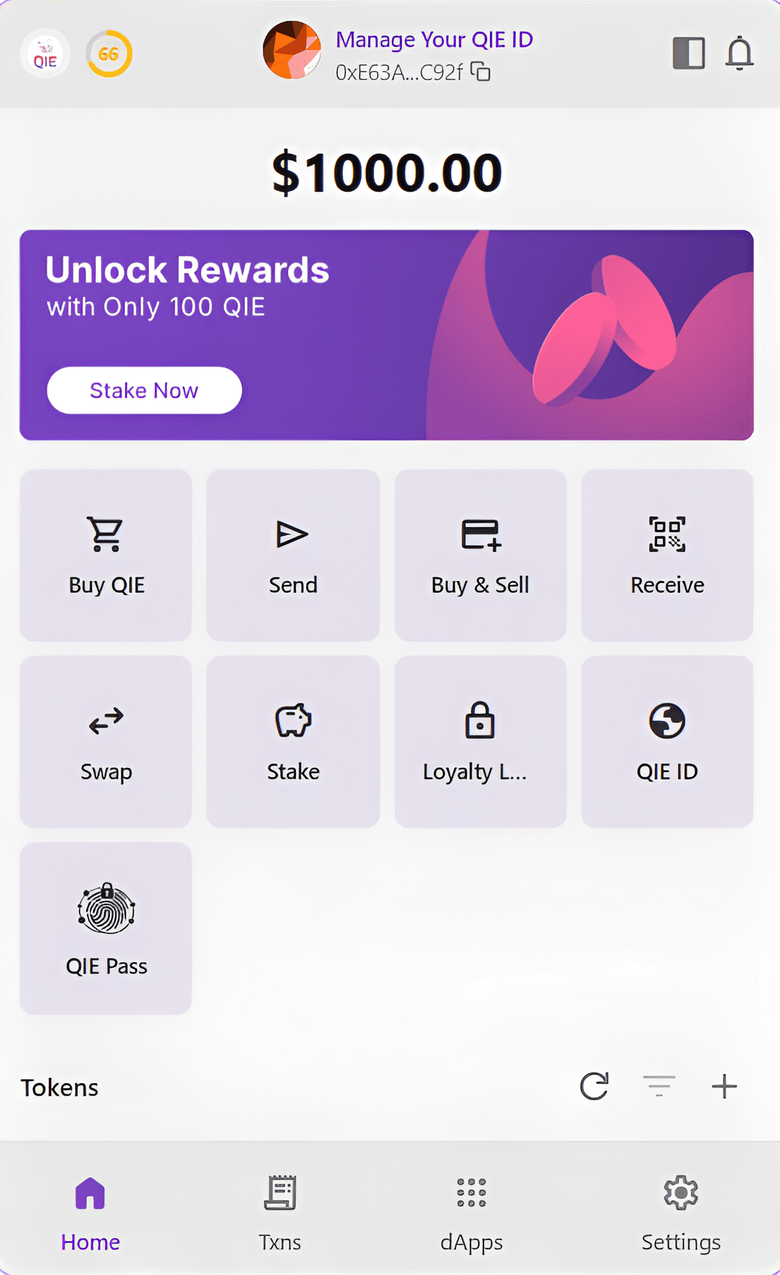
Why a single payment handle changes the workflow
Managing crypto across multiple networks often means juggling different wallet addresses, memorizing formats, and copying long strings that are easy to mistype. That friction becomes especially painful when you regularly receive payments, pay vendors, or distribute One payment ID for all your crypto funds to teammates across several exchanges and apps. A practical alternative is to use one payment handle as your default “destination,” so the recipient doesn’t need to learn every address detail.
With a single handle, you can keep your personal or business identity consistent while still transacting in the background across supported destinations. Instead of sharing new addresses for each platform, you share the same handle and let the service route the funds appropriately. This reduces onboarding time for customers and partners and lowers the chance of lost transfers caused by addressing mistakes.
How to set up Qie ID for reliable transactions
Start by creating your Qie ID at the official domain and completing the identity verification flow once. The goal is to link your verified identity to your payment handle so you can sign in to compatible services without repeating the full KYC process each time. During setup, pay attention to how your profile is displayed and confirm you control the email or phone method used for sign-in and security alerts.
After verification, you’ll be able to generate your payment handle and share it wherever you receive crypto. When someone sends funds, they don’t need to paste a wallet address from your side; they can use your handle and follow the sending instructions provided in the app or wallet interface. On the receiving side, you can check that the handle is active and that the destination paths are correctly configured for supported networks.
Step-by-step: send and receive without address juggling
For receiving crypto, begin by sharing your handle with payers, customers, or anyone who needs to send you funds. Many apps and wallets that integrate with handle-based payments will ask for the handle, then translate it into the correct underlying routing. You should still verify the asset type and network choices shown during the send flow so the payer understands what they are sending.
For sending crypto, use your handle profile to streamline recipient entry and reduce copy-and-paste errors. If the recipient also uses a handle, you can select it in supported interfaces and confirm the amount and asset before you sign the transaction. This approach is particularly useful for repeat payments, subscriptions, freelance invoices, or team expense reimbursements where the same parties are involved every week.
Security and compliance: verification once, access many
One of the biggest advantages of a handle-based system is that it can centralize identity verification while keeping access smooth across multiple services. Instead of completing KYC separately for each exchange or app, your verified status can be reused where integrations support it. That doesn’t mean skipping safeguards; it means you pass checks once and then connect to platforms that recognize your identity.
To keep things secure, treat your sign-in credentials and verification steps as seriously as you treat private keys. Enable strong authentication methods where available, monitor alerts for unusual logins, and avoid sharing sensitive account details with anyone. If your payment handle is public, remember that public visibility is normal; what matters is protecting the account behind it so only you can manage settings and sign in securely.
Conclusion
Choosing a single payment handle is a practical way to reduce friction in crypto transfers, especially when you interact with multiple exchanges, wallets, or apps. It helps you avoid the most common mistakes like copying the wrong address, using an incompatible network, or sharing outdated wallet information. The result is a cleaner experience for both you and the people sending funds to you. Pair that with one-time identity verification and secure sign-in practices, and you get a system that supports real-world usage rather than one-off technical steps. If you want a simpler way to manage crypto payments, a handle-first approach like Qie ID offers a clear path forward.
